13, avenue du Président Wilson 75116 Paris
Open
12h - 21h
Eco Mode
SEARCH THE ENTIRE SITE
Popular searches :
Babi Badalov
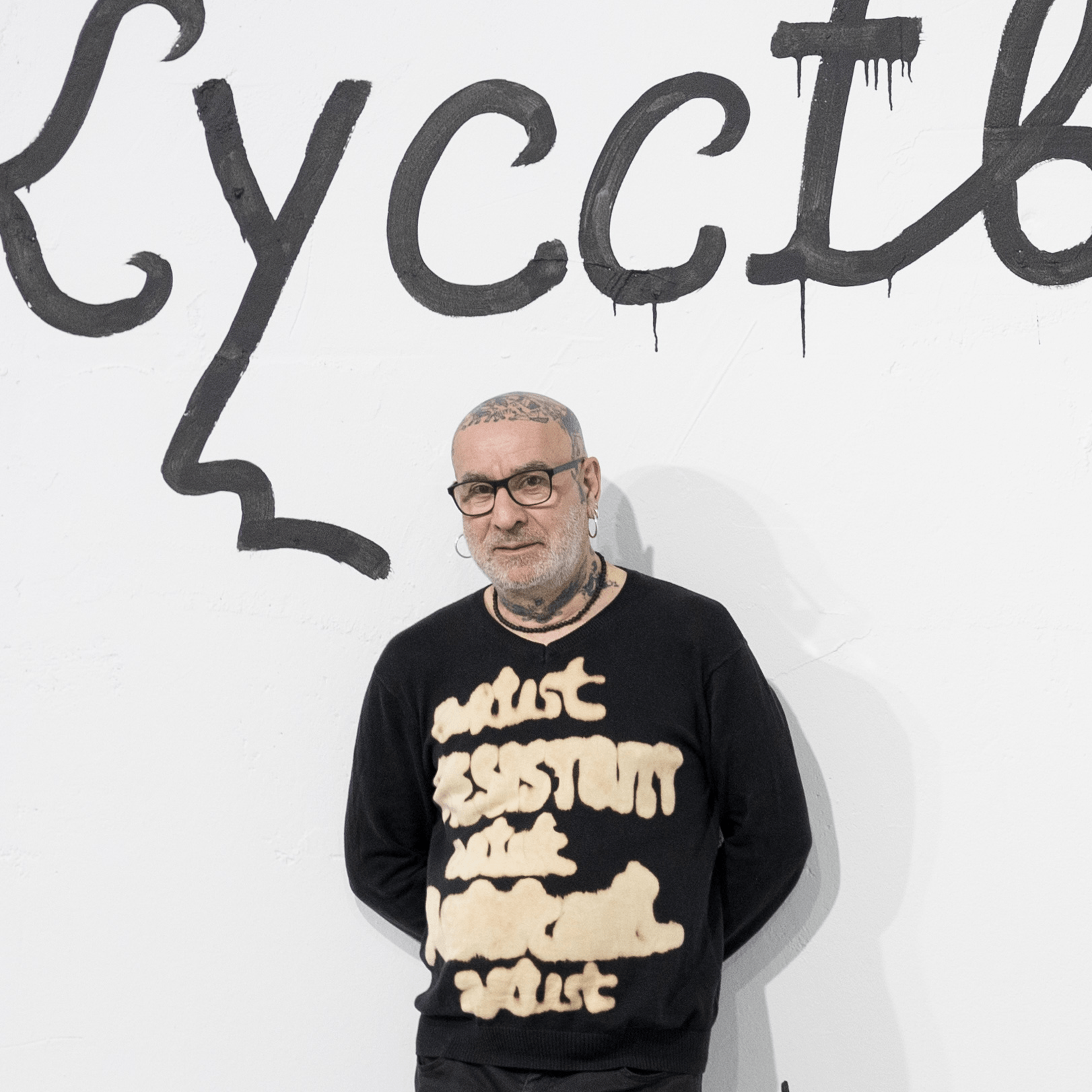
ArtistFrench-Azerbaijani artist and poet Babi Badalov was born in Lerik, a village in Azerbaïdjan, to an Iranian mother and an Azerbaijani father. While his mother tongue is Talysh Azerbaijani, Babi Badalov has encounter many languages—nearly seven in total — none of them mastered in a conventional sense. . He began his artistic career on the Saint Petersburg art scene. In the 1990s, he joined an artists’ squat on Pushkin Street before emigrating first to the United States, and later Cardiff in the UK. After his asylum application was denied, he was deported to Azerbaijan, where he faced threats because of his homosexuality. Following a period of undocumented life in France, he was granted political refugee status in 2011 before receiving French citizenship in 2018.
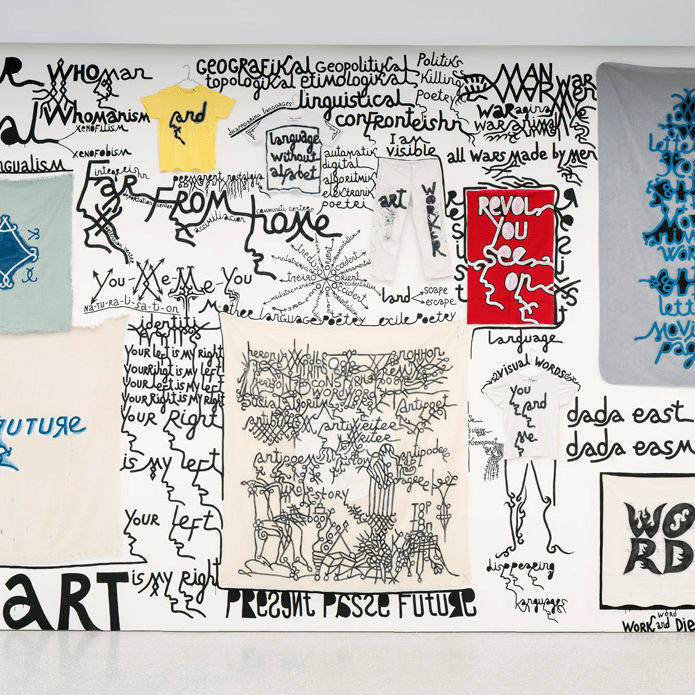
Through his visual poetry, Badalov confronts us with the barriers of language, exposing both linguistic confusion and conflicts of cultural identity it can generate. In his works, he explores the form of words and texts, blending the languages and ideas of Western and Eastern cultures. He combines Cyrillic, Latin, Persian and Russian letterforms with multiple languages, creating unexpected connections and free associations of ideas, as well as wordplay that often carry ironic political commentary.
Babi Badalov has had numerous solo exhibitions, notably at Palais de Tokyo in Paris; the Gwangju Biennale (South Korea); the New Museum of Contemporary Art, Saint Petersburg (Russia); M HKA – Museum of Contemporary Art Antwerp (Belgium); De WerftCultural Centre, Geel (Belgium); Le Cyclop, Milly-la-Forêt (France); CASCO Art Institute, Utrecht (Netherlands); La Verrière – Fondation d’entreprise Hermès, Brussels (Belgium); the Institut national d’histoire de l’art, Paris (France); the Musée cantonal des Beaux-Arts de Lausanne (Switzerland); Tensta Konsthall, Stockholm (Sweden); YARAT Contemporary Art Space, Baku (Azerbaijan); and MUSAC – Museo de Arte Contemporáneo de Castilla y León (Spain).