13, avenue du Président Wilson 75116 Paris
Closed
12h - 22h
Eco Mode
SEARCH THE ENTIRE SITE
Popular searches :
See below
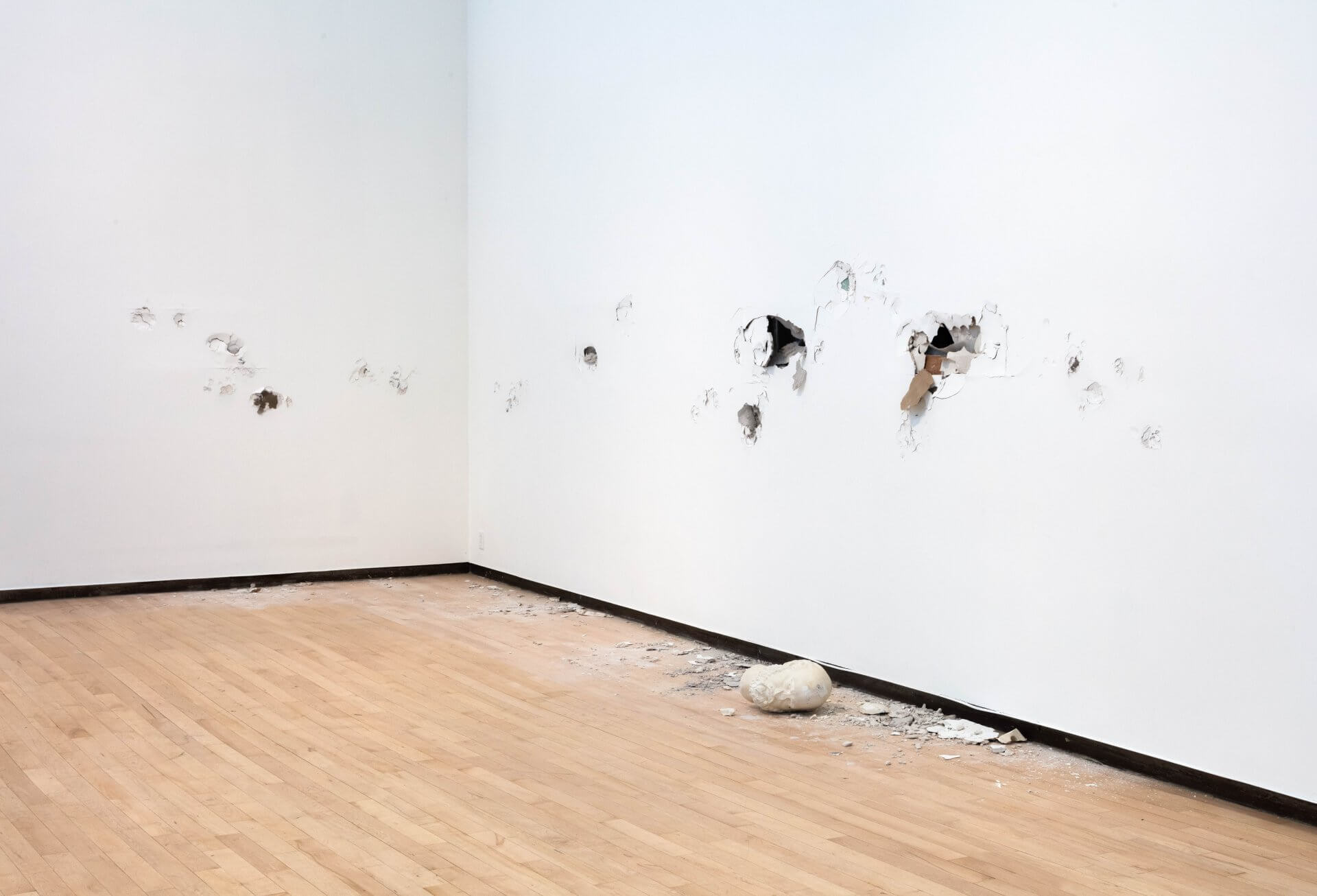
Joseph Grigely, Between the Walls and Me, 2023. Installation view Massachusetts Museum of Contemporary Art, (North Adams), 2023. Photo credit : Jon Verney. Courtesy of the artist and (Romainville / Grand Paris)
This Is Where We Are
JOSEPH GRIGELYfrom 04/03/2026 to 09/13/2026
Accessibility can first and foremost be read in the architecture of a space. Are there steps before reaching the threshold that would prevent wheelchair users from entering? Must one take a separate, less visible route to access the premises?
Invited by Palais de Tokyo to intervene in one of its spaces that remains particularly inaccessible to people with reduced mobility, Joseph Grigely has chosen to directly engage with the challenge of making this space equally available to all audiences. What might emerge from a meeting between a staircase and a ramp at the entrance? Perhaps a new path—one that disabled and non-disabled visitors could share, rather than navigate separately.
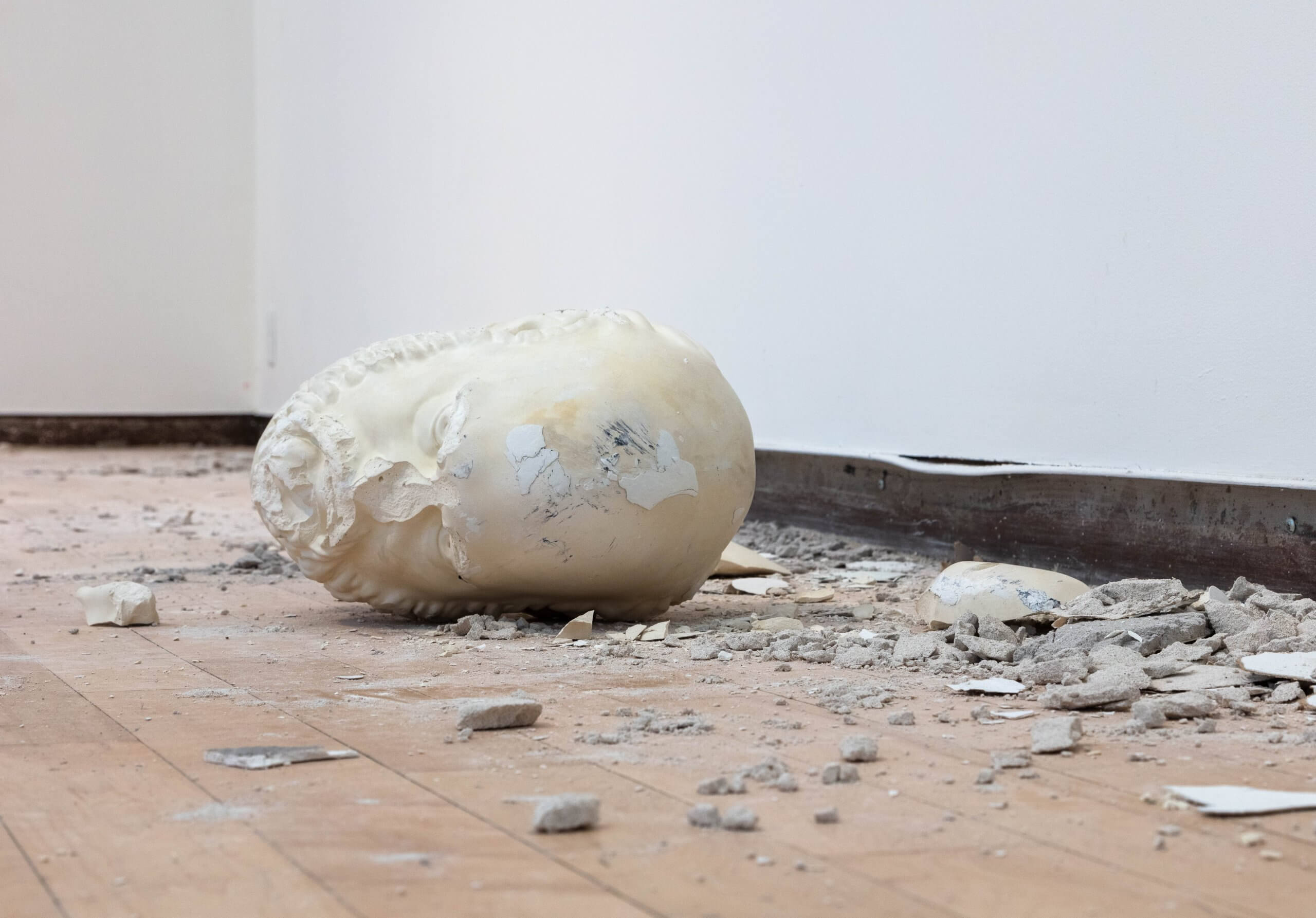
Through a series of works and a risograph-printed publication, the artist sets out to imagine and design what he calls an “architectural prosthesis”—a conceptual and material tool through which to explore both his own slow and difficult ascent within the art world, and to propose new ways to make that path more welcoming. But this process comes at a cost of rethinking the ways institutions organize, present, and find access, and an acknowledgment that the process can be difficult for everyone involved.
It is imperfect by historical design, even when institutions strive to be better. Hence the title of Joseph Grigely’s installation: “This is Where We Are”.
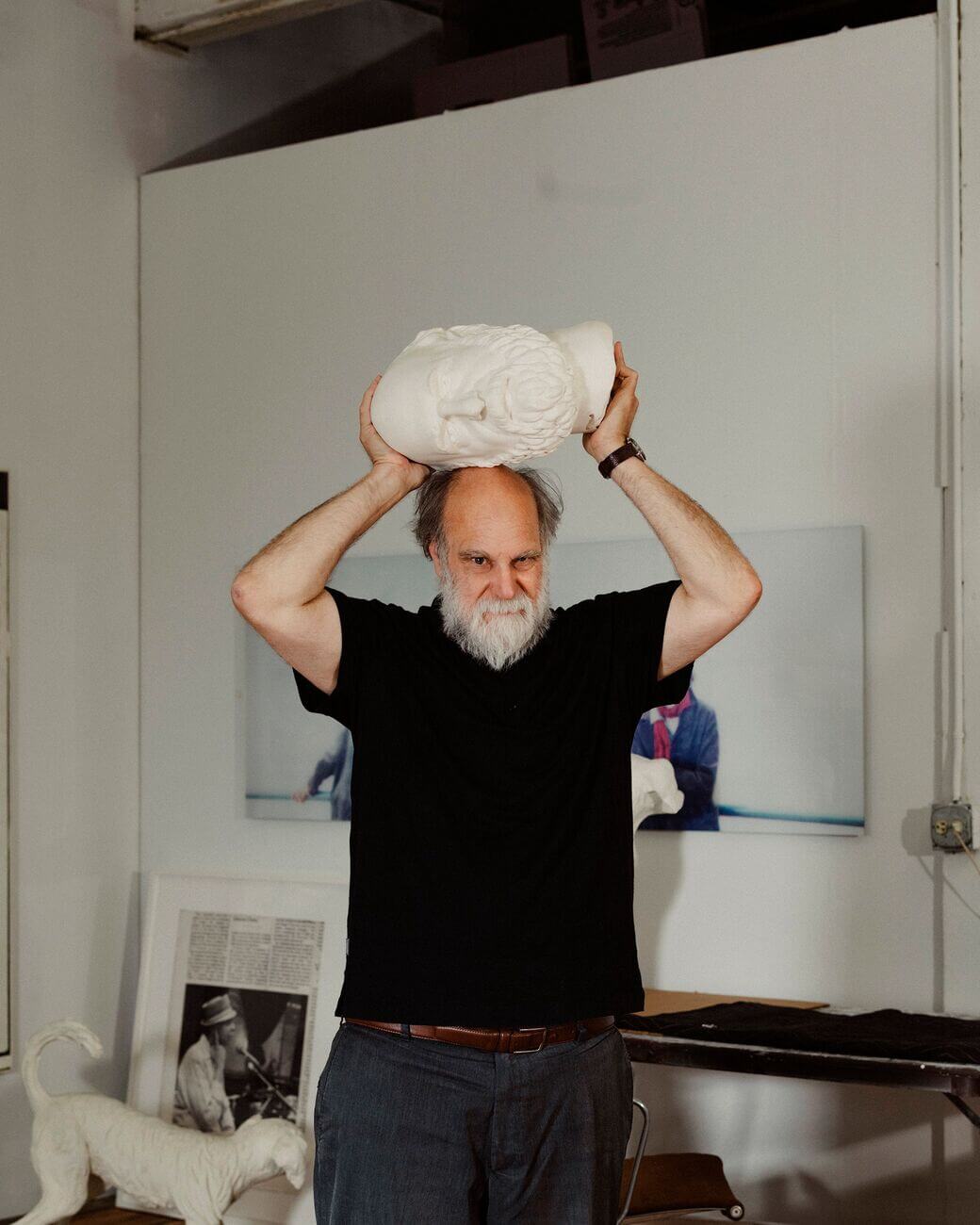
For the past three decades, Joseph Grigely’s work, as an artist, scholar, and activist, has reframed the disabled body as an enabled body by empowering it to question who has access to what, who is denied access to spaces, places, and people, and how this impacts all of us. While having worked across many media forms, Joseph Grigely’s most recognizable work is the Conversation Pieces, a series of works that use notepapers hearing people have written on to communicate with the artist.
He arranges these pieces of paper to create narratives that occupy a space between speech and writing. They appear sometimes as formal grids; sometimes as tableaux; but in every work the notepapers are simultaneously a means of access to the conversations and lives of other people while also being the medium of art itself.
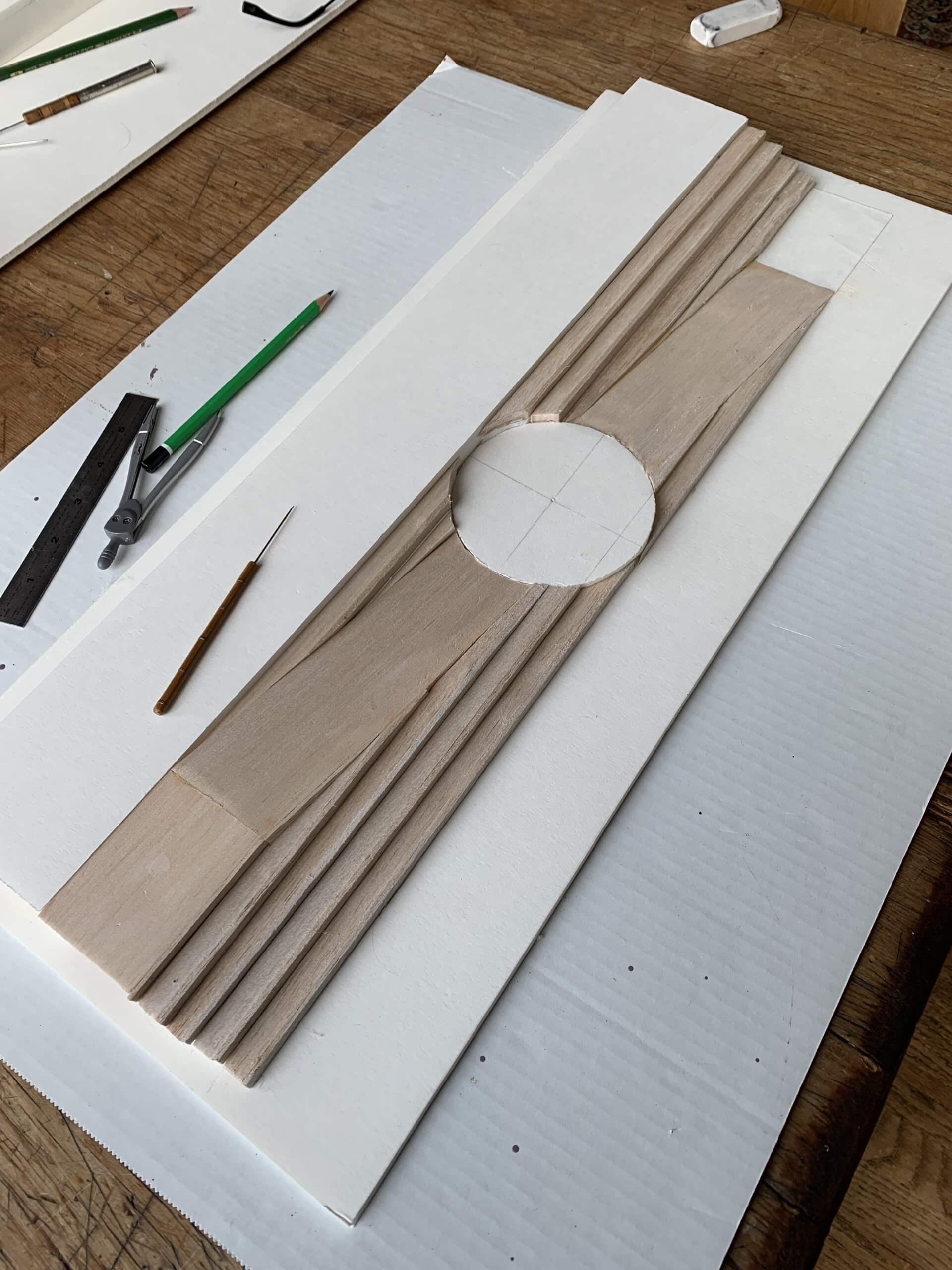
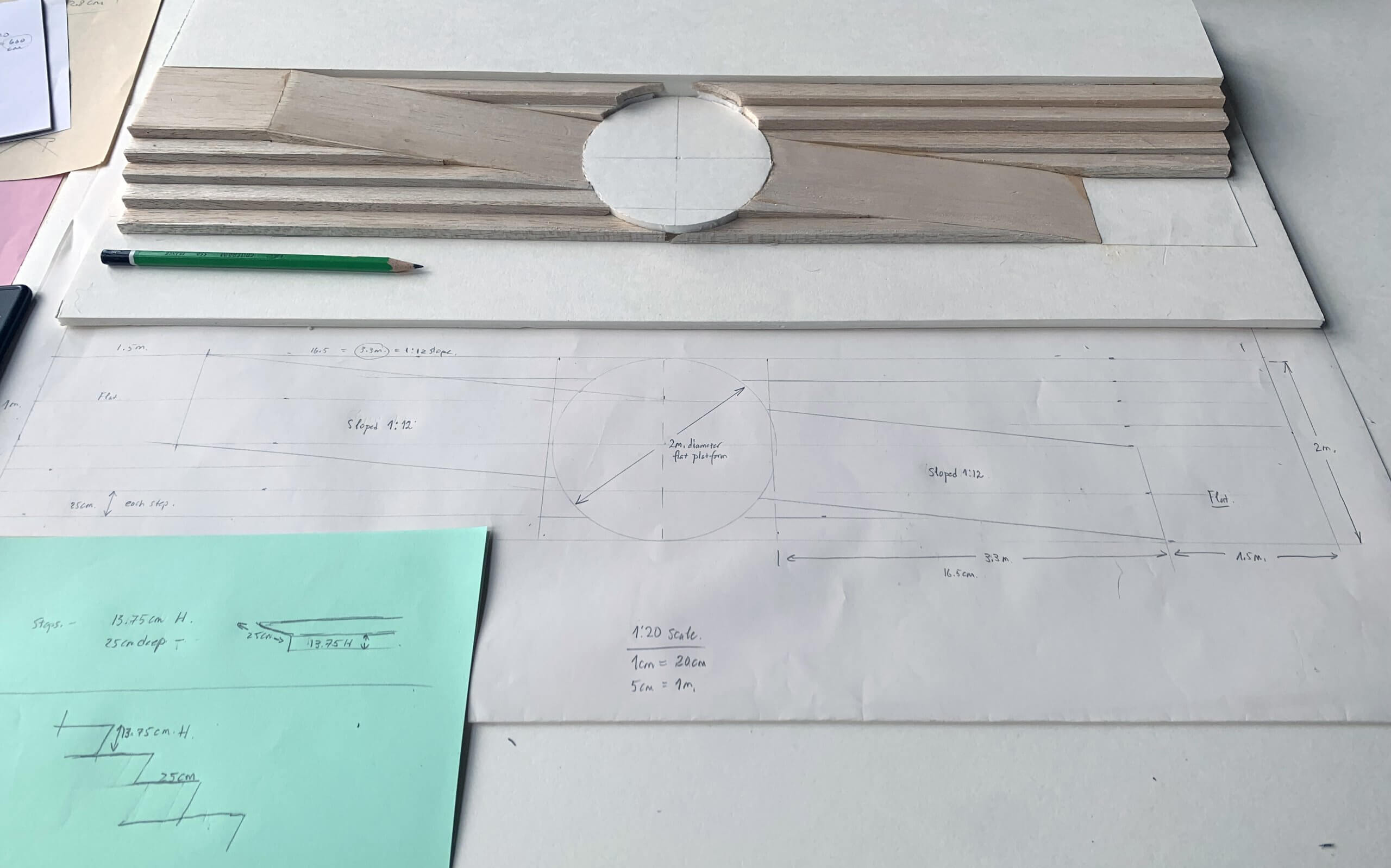
Subsequently, Joseph Grigely has spent three decades creating work that explores the idea of access as a medium. “This is Where We Are” presents his most recent work.
FROM 04/03/2026 TO 09/13/2026

Curator : Horya Makhlouf, assisted by Léna Kemiche
MEDIA PARTNERS